Thomas Stolarski
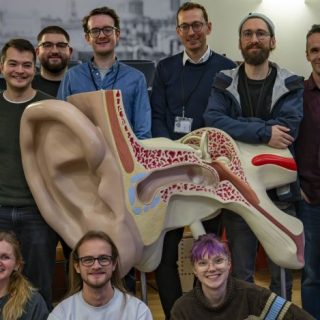
Thomas is part of Cohort 1 at the University of Sheffield.

Shumin is part of Cohort 1 at the University of Sheffield.
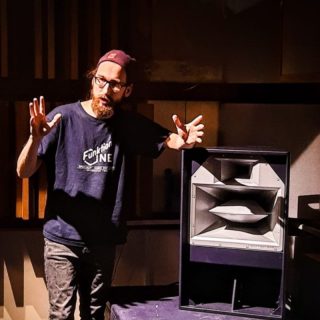
James is part of Cohort 1 at the University of Salford.

Jack is part of Cohort 1 at the University of Southampton.
Project outline This project aims to create a new generation of personalised headphone audio technology that adapts intelligently to an individual’s unique hearing profile and listener preferences. All users, whether they have hearing loss or not, want an effortless, high-fidelity listening experience. Project Partners You will be working closely with Sonos and using the latest […]
Project outline Blind and partially sighted people are heavily reliant on gathering information via aural means. However, having reduced visual input increases listening effort. You will either investigate the cocktail party effect for people with sight loss or reducing listening effort for screen readers at high word rates. Project Partners This project is based at the University of Salford with funding from the Royal National Institute […]
Project outline Numerical methods for acoustic simulations are well established, but scale poorly to high frequencies and large domains. Important applications include simulation of outdoor noise propagation and room acoustics. Physics-informed machine learning is a new and rapidly developing field that has shown promising early results in other physical sciences, and offers significant potential for […]
Project outline This project aims to develop our understanding of how noise impacts cognitive functioning, for example as measured by the change in a listener’s ability to perform a task in the presence of noise. Of particular interest is how the acoustic properties of noise impact our everyday thinking and productivity by consuming sensory and […]
Project outline Evaluating the effectiveness of hearing aid algorithms can be a challenging task as evaluating different environments and conversational scenarios involves a large amount of preparation and effort on the behalf of both researchers and their participants. Using virtual reality, we intend to produce a synthetic environment that allows for a balance between reproducibility […]
Project outline This project is a strategic collaboration with the Yorkshire Ambulance Service (YAS) aimed at enhancing the speed and accuracy of emergency call prioritization. The core objective is to develop and validate advanced deep learning models capable of analyzing the acoustic properties of emergency calls in real-time. A significant challenge in emergency dispatch is the rapid […]