Max Ellis of the Salford Acoustics Research Centre is undertaking pioneering research aimed at improving understanding of how people perceive emerging noise sources within increasingly complex sound environments.
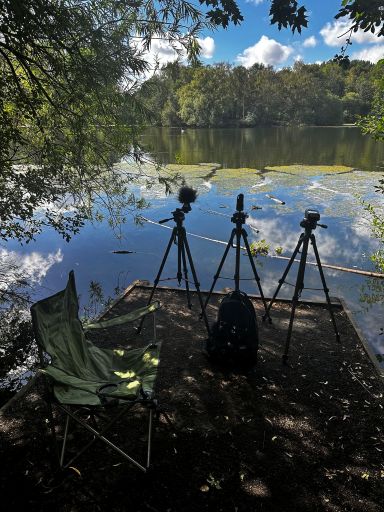
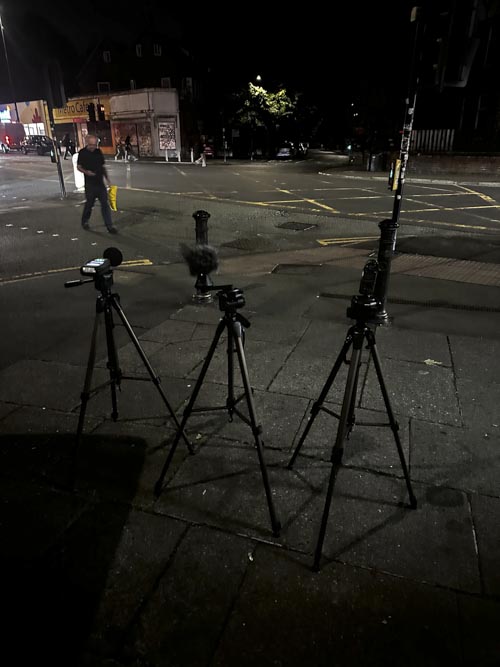
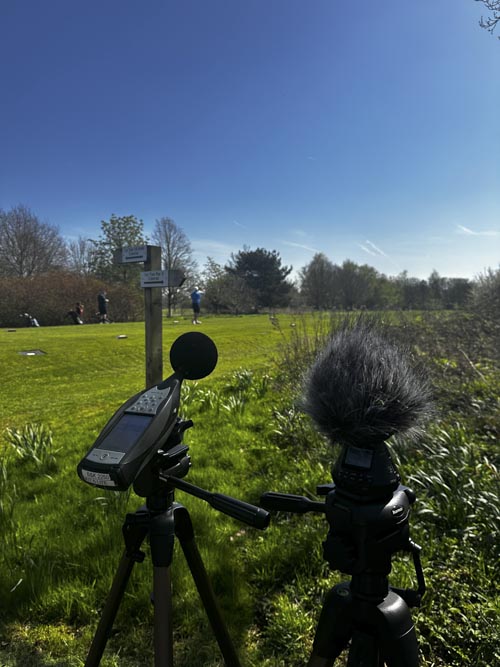
Supported by the Department for Environment, Food and Rural Affairs (Defra), Max has been conducting fieldwork across a diverse range of environments, collecting valuable research data for his PhD project, “Psychoacoustic Assessment and Machine Listening-Based Modelling of Novel Noise Source Perception in Complex Soundscapes.”
The project combines psychoacoustics, the study of how humans perceive sound, with advanced machine listening techniques to investigate the impact of new and evolving noise sources on communities and environments. By gathering data from a variety of real-world settings, Max is building a deeper understanding of the factors that influence how people experience sound, beyond traditional measurements of noise levels alone.
As urban environments become more acoustically complex and novel technologies introduce new forms of sound into everyday life, researchers and policymakers face growing challenges in accurately predicting public responses to noise. Max’s work seeks to address this gap by developing models that better reflect human perception, enabling a more nuanced assessment of acoustic environments.
The research has the potential to inform future approaches to environmental noise management, helping decision-makers better understand the relationship between measured sound and lived experience. By integrating machine listening methods with psychoacoustic assessment, the project aims to create tools capable of identifying and modelling noise sources in ways that more closely align with how people actually hear and interpret them.
The Salford Acoustics Research Centre has long been recognised as a leader in acoustics and sound research, and Max’s PhD study represents another step forward in the field. Through extensive data collection and analysis, the project is contributing to a growing body of knowledge focused on creating healthier and more sustainable soundscapes.
As the research progresses, findings from the study could play an important role in shaping future environmental policy, noise assessment practices, and the design of more people-centred acoustic environments.