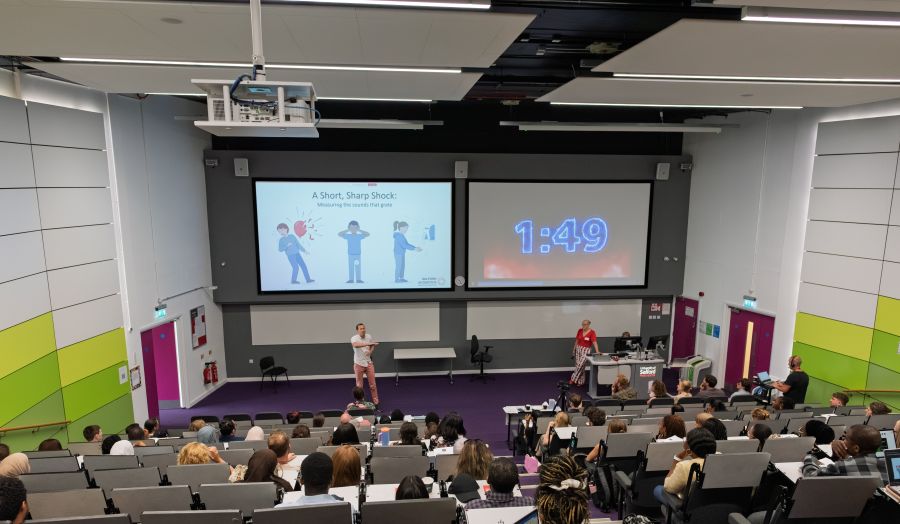
Sound Futures CDT student Matt Torjussen has been recognised for their outstanding research communication skills after reaching the finals of this year’s Three Minute Thesis (3MT) competition at the University of Salford’s SPARC conference.
Congratulations to Matt Torjussen who was selected as a finalist and showcased his PhD research in a presentation named ‘A Short, Sharp Shock: Measuring the sounds that grate’ as part of the prestigious 3MT competition during SPARC 2026 (Salford Postgraduate Annual Research Conference).
SPARC, the University of Salford’s flagship postgraduate research event, returned on 23–24 June 2026, bringing together postgraduate researchers, academic staff, students and members of the public to celebrate and share innovative research from across the University. This year’s conference marked a significant milestone, celebrating 25 years of postgraduate research at Salford.
The annual event provides a platform for postgraduate researchers to present their work to both in-person and online audiences, encouraging collaboration, discussion and knowledge exchange across disciplines. The Three Minute Thesis competition forms a key part of the programme, challenging doctoral researchers to communicate complex research projects in a clear and engaging way to a non-specialist audience.
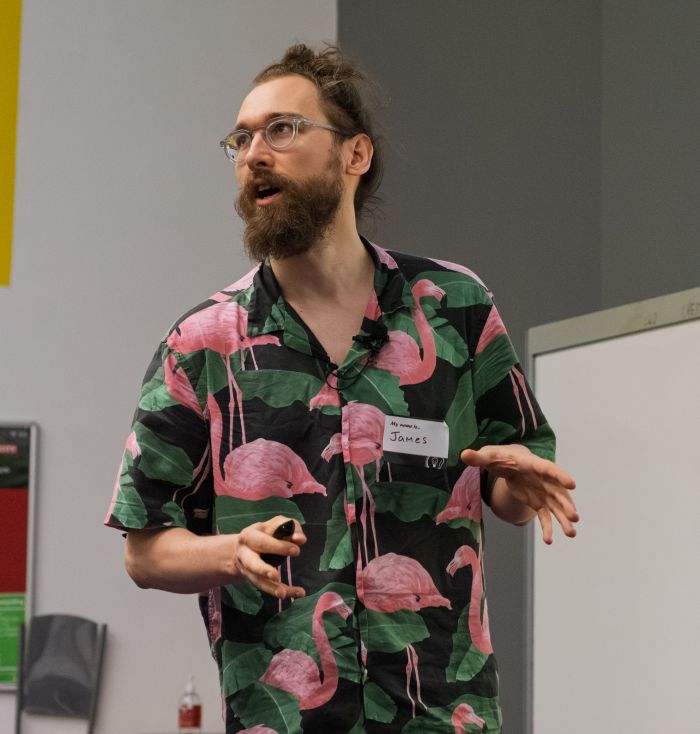
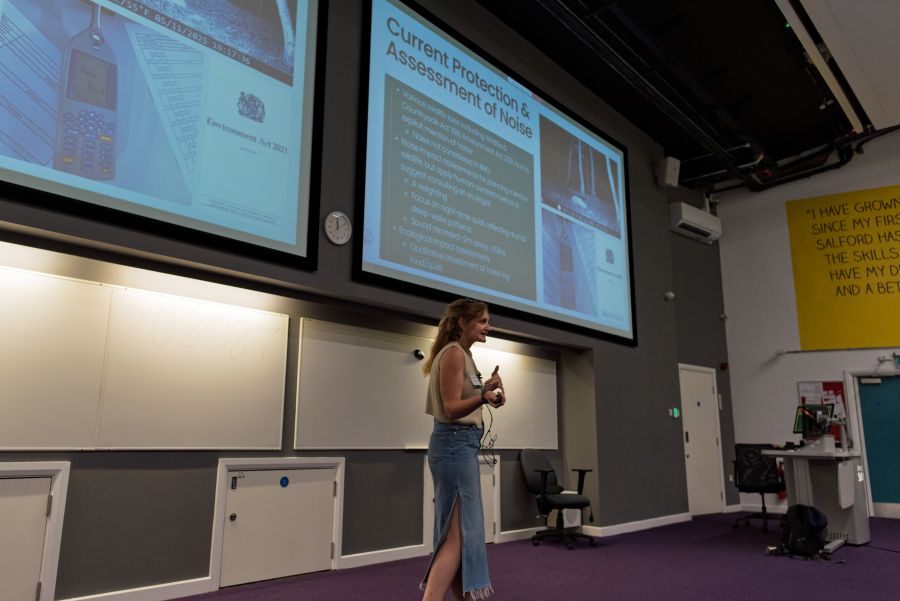
Also presenting at the conference on the topic of ‘Sound’ were Sarah Armstrong who presented on ‘Developing Methods to Assess the Impact of Noise Pollution on British Terrestrial Mammals’ and James Hipperson who presented ‘Gradient-based Geometry Optimisation for Acoustic Devices’. On day 2, Katie Salter presented under the topic ‘Home’ with a presentation titled ‘Influence of Tonality and Placement on Perception of Air Source Heat Pump Noise’.
The achievements of Matt, Sarah, James and Katie highlight the exciting and impactful research taking place within the CDT Sound Futures community. They demonstrated not only academic excellence but also the ability to make their research accessible and relevant to wider audiences.