The Salford Acoustics Research Centre hosted this year’s CDT Summer School 2026, bringing together a new cohort of students for an intensive, hands-on exploration of sound, perception, and experimental science. The programme centred on a timely and increasingly relevant real-world challenge: understanding how the rising presence of delivery drones may affect people through noise.
Set by leading acoustics researcher Antonio José Torija Martínez, the task required students to design a psychoacoustic experiment investigating human responses to drone noise—an issue of growing importance as drone-based delivery systems expand across urban environments.
Immersive Learning from Day One
The summer school opened with a packed first day, equipping participants with the technical and theoretical tools needed to tackle the challenge. Sessions covered a range of critical topics, including:
- Psychoacoustic testing — exploring how humans perceive sound beyond simple physical measurements
- Experimental design — ensuring robust, reliable, and reproducible research methods
- Statistics — enabling students to analyse and interpret data effectively
- Drone noise auralisation — recreating drone sounds for controlled listening studies
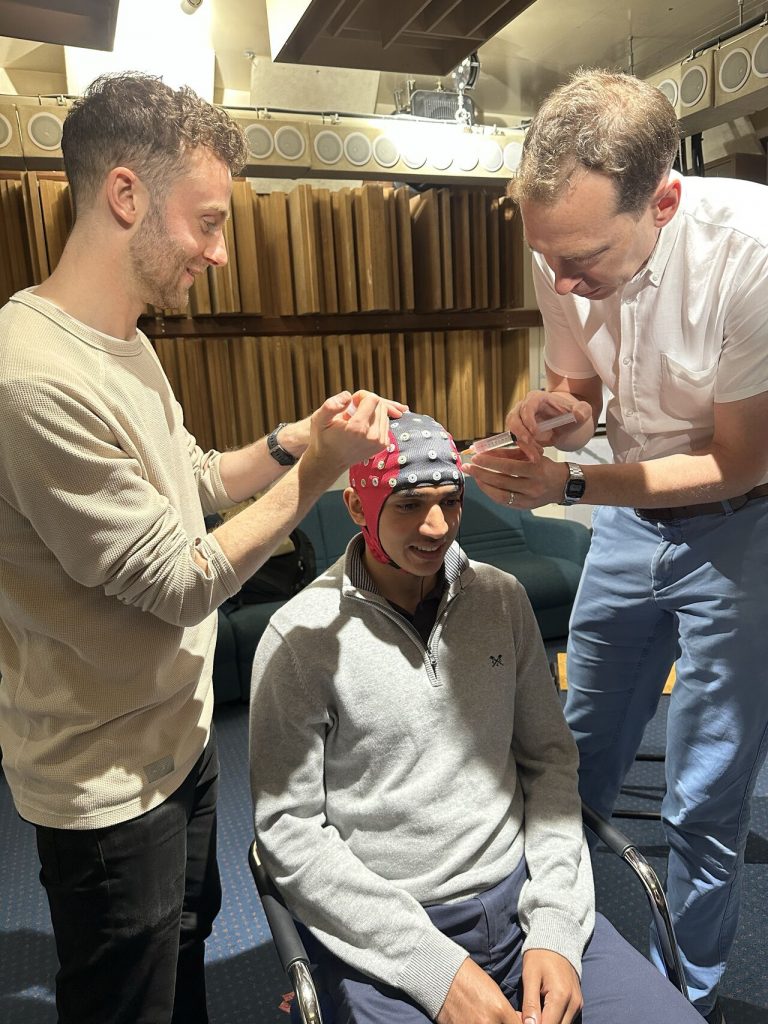
- Physiological measurement techniques — examining how sound influences the body as well as perception
These sessions aimed to bridge the gap between theory and application, encouraging students to think critically about how to measure both subjective perception and objective physiological responses to noise.
From Classroom to Soundscape
The day concluded with a soundscape walk through Peel Park, offering students a chance to apply their learning in a real-world setting. The exercise highlighted how environmental sounds are experienced in everyday life, reinforcing the importance of context in acoustic research.
By stepping outside the lab and into a living environment, participants were able to reflect on how sound interacts with space, movement, and human activity—an essential perspective when studying emerging noise sources such as drones.
Tackling a Modern Urban Challenge
Delivery drones represent a rapidly developing technology with the potential to transform logistics and urban living. However, alongside their benefits, concerns about noise pollution and its impact on wellbeing are growing.
The CDT Summer School’s focus on this issue underscores the importance of human-centred acoustic research. By designing psychoacoustic experiments, students are contributing to a deeper understanding of how drone noise may influence comfort, stress, and overall quality of life.
Such research is vital for informing future policy, urban planning, and technological design, ensuring that innovation remains aligned with public wellbeing.
with valuable insights from both research and professional perspectives, enriching the learning experience.
Looking Ahead
As the CDT Summer School continues to grow, initiatives like this highlight the importance of interdisciplinary collaboration in addressing complex environmental challenges. By combining acoustics, psychology, engineering, and data science, the next generation of researchers is being equipped to shape a quieter, healthier future.
With drone technology poised to become a common feature of modern life, the work carried out at Salford represents a crucial step towards understanding—and managing—the sounds of tomorrow.