Thomas Stolarski
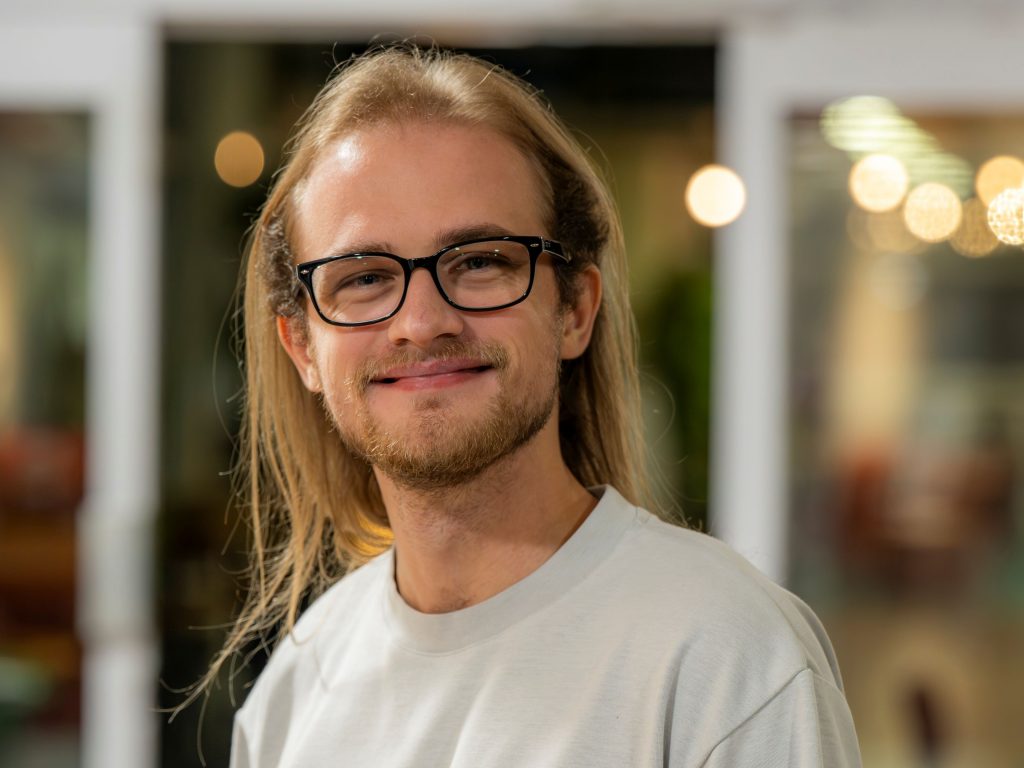
I’m a computer scientist that specializes in high performance systems programming and tooling. I like making software that’s intuitive and encourages the user to see their data and the world in a different way.
Project Title: Using real-time acoustic resynthesis in virtual reality to assess conversational behaviour and user preference for hearing aid users
Project Partner: RNID
Supervisors: Jon Barker & Simone Graetzer
What is your PhD is about?
Synthetic replication of complex acoustic scenes from the perspective of hearing aids, aided by the use of virtual reality.
Why is it important to do this research?
Training and testing hearing aid algorithms is difficult and time consuming, as getting both a clean reference signal and the sound as heard in complex acoustic conditions requires a lot of care. The ability to create this data synthetically may improve the accuracy and quantity of data that can be used, and opens up the opportunity for personalized hearing aid algorithms that tailor to the user’s specific wants and needs.
What drew you to studying this PhD?
I have a number of friends with hearing difficulties, and investigation into literature about synthetic data in model training convinced me that my experience in producing realistic scenes in virtual reality could translate into a valuable part of real world acoustic research.
What does a Sustainable Sound Future mean to you?
My friends always say that the most often overlooked part of hearing solutions is the user themselves. My hope is to open up pathways for users to feel their hearing devices work with them, not just for them.
What were you doing before joining the CDT?
Primarily education in computer science and software engineering, but I spent a lot of my time doing personal software passion projects.
What do you do on a typical PhD day so far?
At the moment, a lot of research and paper reading! It’s been exciting exploring not just the underlying acoustic math, but the research into psychoacoustics and how our sound environment affects the way we act and think.
Tell us a fun acoustic fact!
DTMF, the ubiquitous audible data transfer method most well known as the sounds produced when pressing phone keypad keys, is still so commonly used to communicate between computers that even modern technologies like WebRTC have built in support for it!